

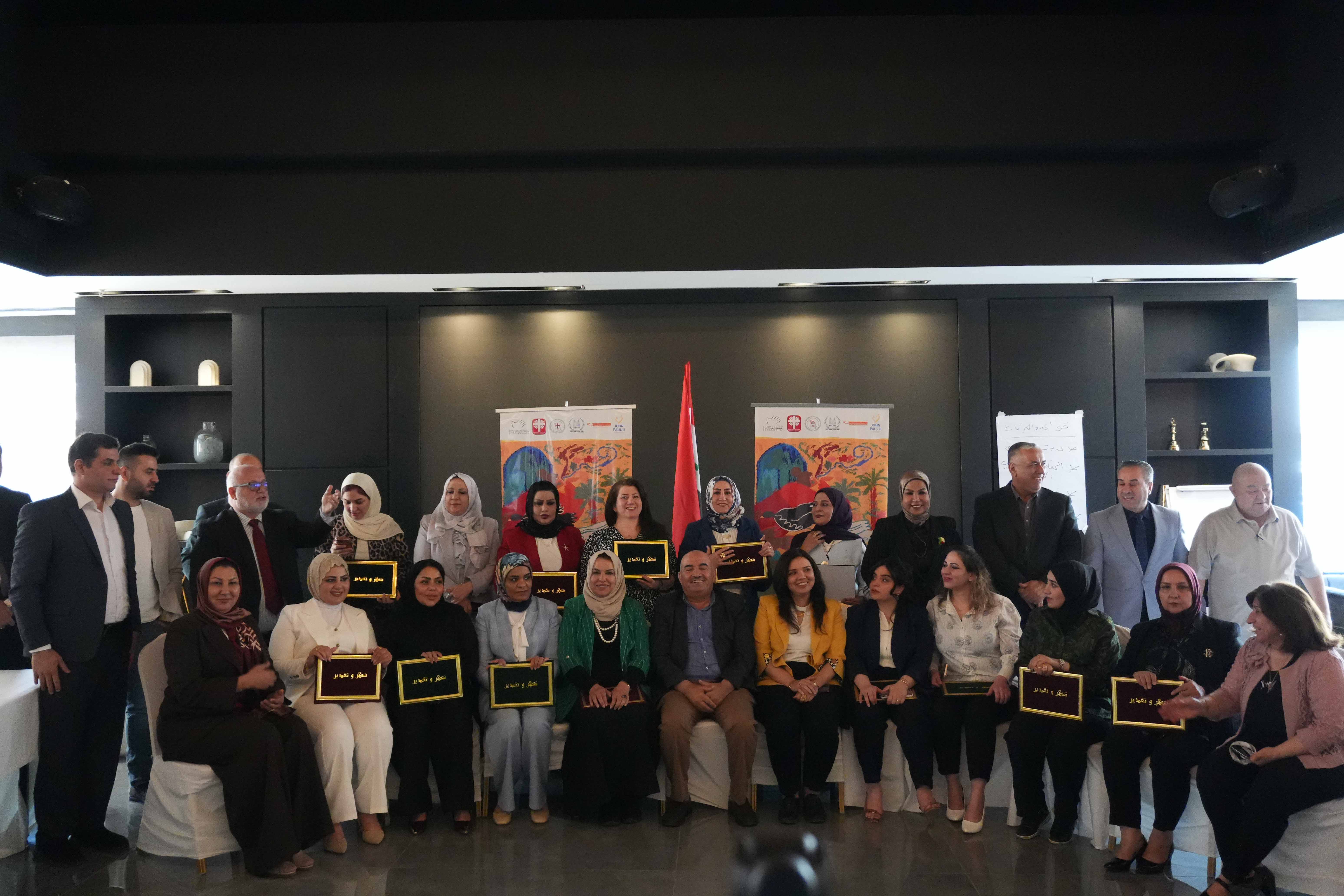
The Iraqi capital, Baghdad, witnessed the conclusion of the training workshop titled “Developing the Capacities of Academic Women in Human Rights and Women’s Rights Issues,” organized by Hammurabi Human Rights Organization in coordination with the John Paul II Foundation (FGPII) and funded by the Italian Agency for Development. The workshop lasted for three days, from 21 to 23 May 2026, and featured intensive training and interactive dialogue sessions hosted at THE V Hotel in Baghdad.
The workshop brought together 20 female academics and researchers representing four Iraqi universities: University of Baghdad, Al-Mustansiriya University, The Iraqi University, and University of Basrah. The workshop aimed to strengthen the participants academic and human rights capacities and empower them to engage in advocacy and the promotion of women’s rights and human rights within educational and community institutions.
The workshop featured a series of sessions addressing key issues related to United Nations Security Council Resolution 1325 on Women, Peace, and Security, the Yazidi Female Survivors Law, gender stereotypes, the right to health and education, violence against women, and women’s participation in political and public life. The program also focused on mechanisms for integrating women’s rights concepts into academic curricula and the educational environment, while emphasizing the development of collective action tools and human rights advocacy within the university and academic context.
The workshop sessions were led by a number of academic and human rights figures, including Pascale Warda, Dr. Anas Al-Azzawi, Dr. Mohammed Kazem, Dr. Ali Abbas Murad, and Dr. Abdul Sattar Abdul Jabbar. The facilitation and presentation of the training modules were conducted by Dr. Mohammed Turki Al-Obaidi and Dr. Khudair Al-Domle, while Dr. Daham Al-Azzawi also contributed to the management of several sessions focusing on women’s rights and health-related issues.
The workshop adopted an interactive training methodology that included brainstorming sessions, group work, open discussions, and exercises focused on developing recommendations and suggestions, aiming to foster a more effective academic approach to addressing women’s issues and human rights while linking theoretical perspectives with practical realities and current social challenges.
The participants emphasized the importance of continuing such specialized training programs, as they provide a valuable space for dialogue, exchange of expertise, and the strengthening of human rights awareness. They also stressed the need to expand joint academic and civil society efforts to support Iraqi women’s rights and enhance their presence in various fields of public life and decision-making.
The participants were awarded certificates at the end of the workshop in recognition of their commitment and active engagement throughout the sessions.