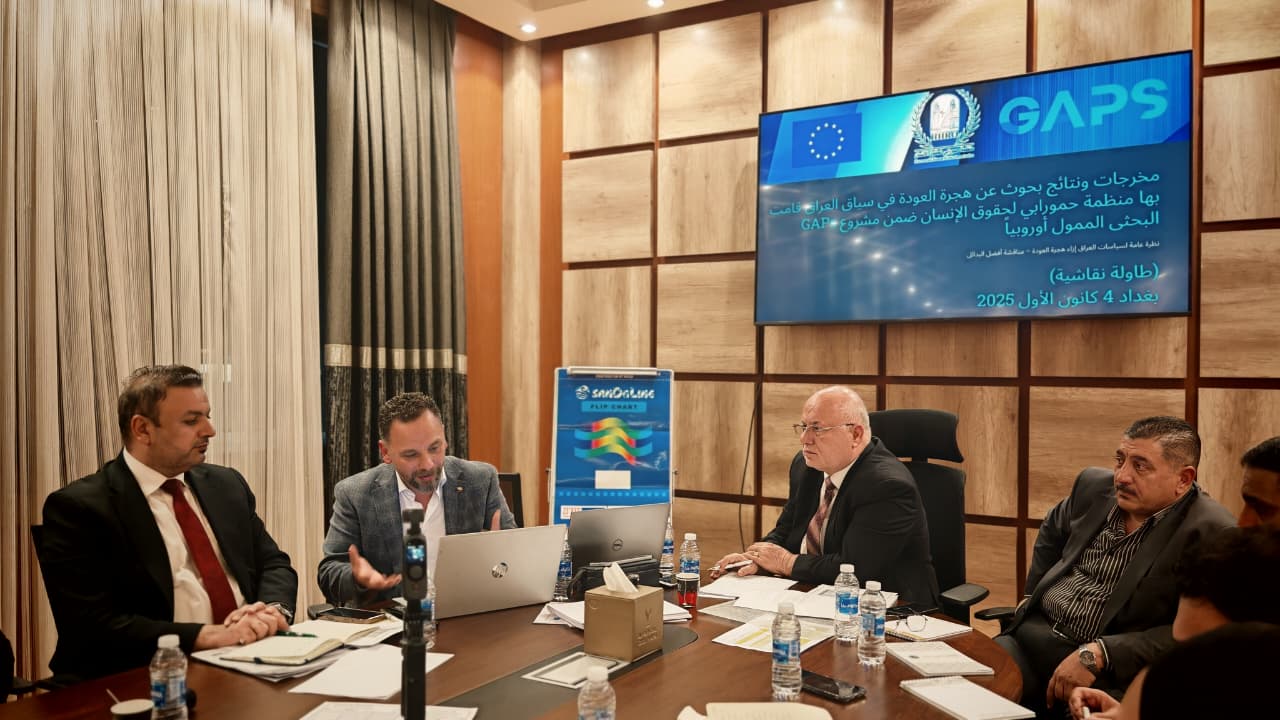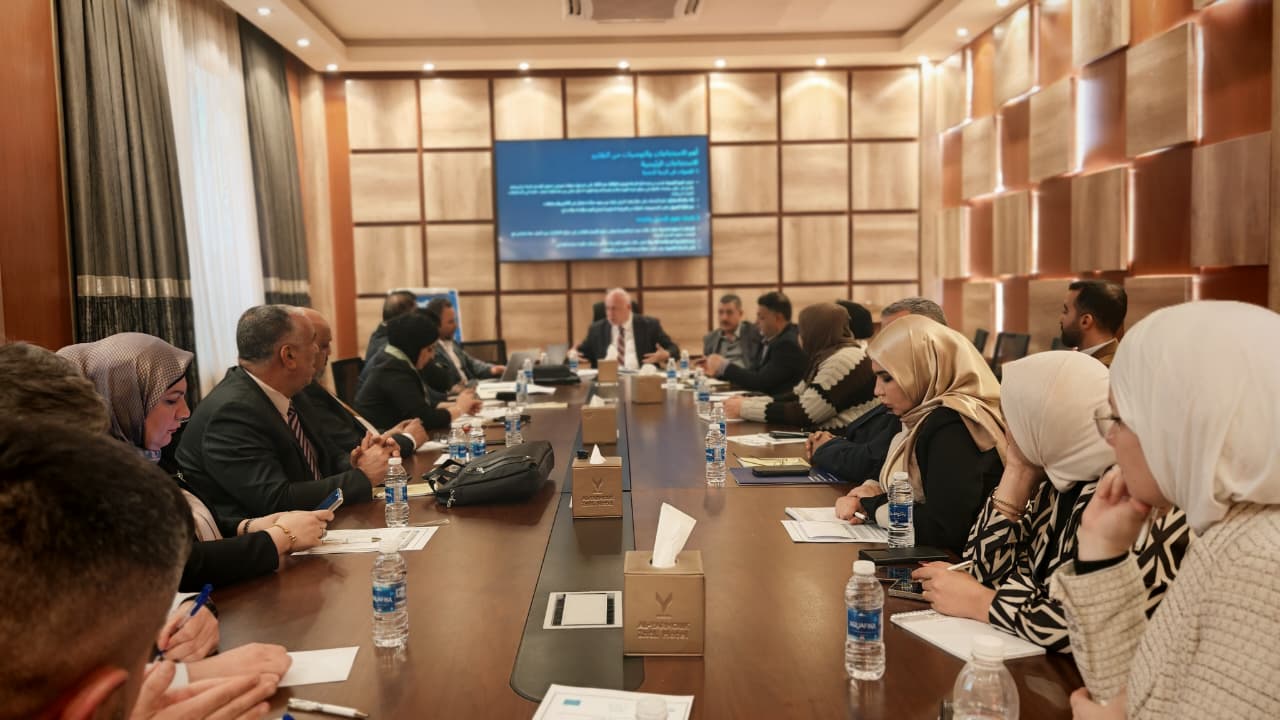

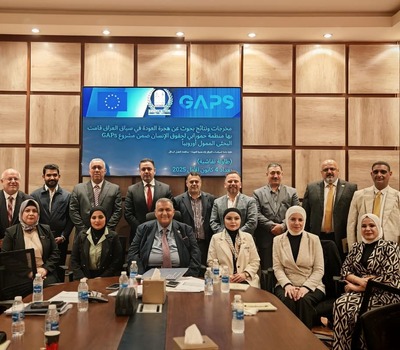
As part of the EU-funded GAPs research project, the Hammurabi Human Rights Organization held a roundtable meeting at the Yarmouk International Hotel in Baghdad, with an active participation of stakeholders in the field of return migration.
The meeting aimed to present the findings and outcomes of the reports prepared by the organization within the project, and to discuss Iraqi policies and feasible alternatives regarding humanitarian return for Iraqis returning from EU countries to their homeland.
The meeting was attended by 23 figures including members of the organization research team and representatives of several governmental and non-governmental institutions, including: the General Secretariat of the Council of Ministers, the Department of Non-Governmental Organizations, the Ministry of Migration and Displacement, the Ministry of Labor and Social Affairs, the Ministry of Justice, the International Organization for Migration (IOM), the International Committee of the Red Cross (ICRC), the International Centre for Migration Policy Development (ICMPD), the European Training and Technology Centre (ETTC), and the Tawasul and Nasma Ata'a organizations. Two returnees also attended the session, adding a realistic and humanistic character to the discussion.
The meeting began with a welcoming speech delivered by the s Vice President of the organization Dr. Mohammed Al-Maini, expressing his appreciation to the participants for their commitment, stressing on the importance of collective work in addressing the issues of the return migration. He also provided an introductory overview of the GAPs project, its objectives, and the international partners involved in it.
The session was moderated by Mr. William Warda, head of the organization's research team, presenting the achievements of the team since the launch of the project in 2023, highlighting key findings and recommendations regarding return migration. A roadmap for migration and return policies in Iraq and their evolution was also presented
The attendees listened to real-life experiences from returnees discussing the challenges hindering their reintegration into society after return. This was followed by a discussion that included valuable interventions from representatives of participating organizations regarding the practical obstacles and humanitarian alternatives for return migration in Iraq.
The meeting came out with a number of important recommendations aimed at strengthening the infrastructure supporting return migration in Iraq and improving mechanisms for reintegrating returnees into their local communities, in a way that preserves their dignity and human rights.